
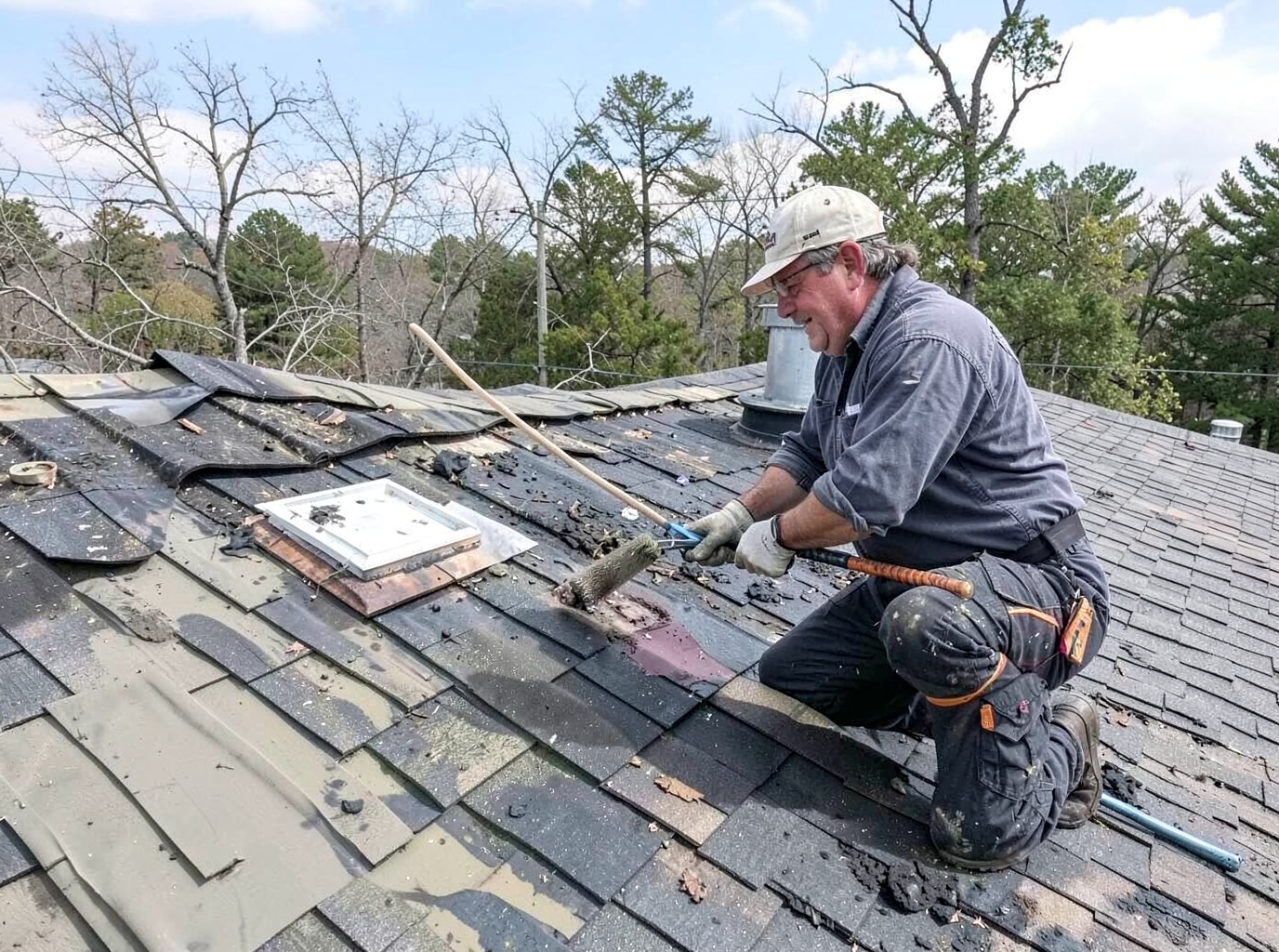
Hail storms in Rocky Mount often hit during summer thunderstorms common to the humid subtropical climate, denting asphalt shingles on homes built before the 1980s in Battle Park and Englewood. These older roofs, common in Nash County, lack the impact resistance of modern materials, so even moderate hail can crack granules and expose underlayment to moisture. Crews inspect for hidden fractures around vents and valleys where water pools during mild winters, preventing leaks that spread faster in the area's high humidity.
Metal roofs at Rocky Mount Mills require different handling because hail creates dents that trap water and accelerate corrosion in the coastal-influenced air. Repair focuses on sealing rather than full replacement when damage stays localized, but crews check flashing at chimneys and skylights first since those edges fail quickest after impact. Homeowners in Downtown Rocky Mount often overlook granule loss on north-facing slopes, where shade from trees keeps surfaces wet longer and speeds deterioration.
Insurance documentation matters here because Nash County carriers require photos of specific hail patterns before approving claims. Technicians photograph each affected shingle and note wind-driven rain entry points around Battle Park's older brick homes, where steep pitches channel water differently than the flatter lots near the Rocky Mount Event Center. Proper underlayment replacement during repairs stops interior staining that appears weeks after the initial storm.
Edge cases include mixed-material roofs where hail damages only the asphalt section while leaving tile intact, requiring precise matching to avoid warranty voids. Local crews avoid generic patches because temperature swings from hot summers to mild winters cause expansion that loosens poor repairs within one season.
Technician insight
In Rocky Mount, the thing that catches most people out with Hail Damage Roof Repair is older underlayment on pre-1980 homes in Englewood and Battle Park. Hot summer humidity plus mild winter moisture lets small hail fractures leak weeks later because the felt has already dried out and cracked along the seams.
Hail Damage on Englewood Bungalow
A summer storm left dents across the north slope of a 1970s bungalow in Englewood. Inspection found cracked granules and water trapped under the valley felt. Crews replaced only the damaged shingles and underlayment while sealing the valley edges. The roof stayed dry through the next heavy rain season.
Hail Damage Roof Repair Services We Offer
✓Hail Impact Assessment
Detailed roof inspection that maps every dent and granule loss across Rocky Mount properties, including photos for Nash County insurance claims.
✓Asphalt Shingle Hail Repair
Targeted replacement of cracked or missing shingles on older Englewood and Battle Park homes while preserving surrounding undamaged sections.
✓Metal Roof Dent Sealing
Seals and coats hail dents on metal roofs at Rocky Mount Mills to stop moisture trapping without full panel replacement.
✓Emergency Hail Tarping
Quick temporary tarping after storms to protect interiors in Downtown Rocky Mount until permanent repairs can begin.
✓Insurance Claim Documentation
Provides detailed storm damage reports and photos accepted by carriers serving Wilson, Tarboro, and Greenville policyholders.
✓Flashing and Valley Hail Repair
Restores damaged flashing and valleys around chimneys where hail concentrates water flow on Nash County homes.
Hail Damage Roof Repair Cost in Rocky Mount, NC
| Service | Typical Range | What Affects It |
|---|---|---|
| Hail Impact Assessment | $150–$300 | Includes photos and report; higher for multi-story homes in Battle Park |
| Partial Shingle Replacement | $800–$2,200 | Depends on number of squares damaged and access in older Englewood stock |
| Metal Dent Sealing | $600–$1,800 | Varies with roof pitch and number of panels affected at Rocky Mount Mills |
| Emergency Tarping | $250–$500 | Size of area covered and urgency after storm |
Ranges are typical for Rocky Mount, NC and confirmed with an exact written quote before any work starts.
How it works
- 1
On-Site Inspection
Technician examines every slope for hail dents, granule loss, and water entry points while noting roof age and material type common to Rocky Mount neighborhoods.
- 2
Damage Documentation
Photos and measurements are taken for insurance or homeowner records, focusing on patterns typical after local summer storms.
- 3
Material Matching And Repair
Matching shingles or sealants are applied to affected areas only, with underlayment checks around vents and valleys.
- 4
Final Walkthrough
Crew reviews completed work with the homeowner and explains any follow-up checks needed after the next heavy rain.
Pricing
Upfront quotes after inspection; costs vary by roof size, material, and extent of hidden damage.